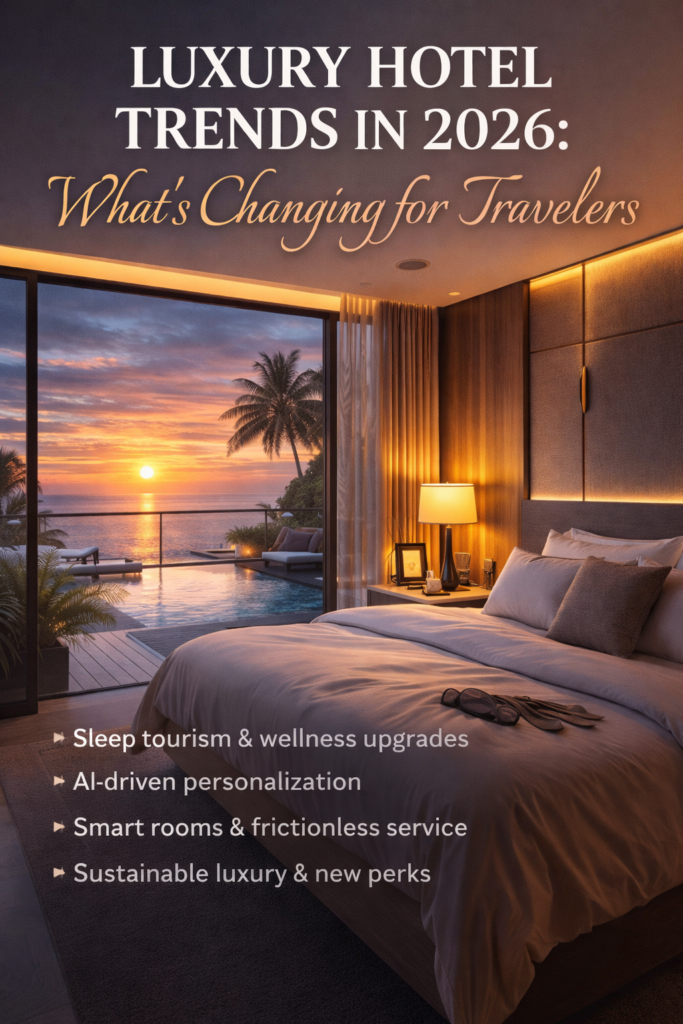
Luxury Hotel Trends in 2026, Luxury hotels in 2026 aren’t just “nicer hotels.” They’re basically lifestyle engines—designed to make you sleep deeper, move easier, eat better, and feel like the world is finally… quiet. And honestly? That’s what travelers are paying for now: results, not just chandeliers.
If you’ve booked a five-star stay recently and thought, “This is great, but why does it feel the same as everywhere else?”—you’re not alone. The big shift in luxury hospitality trends 2026 is that hotels are trying to stand out through personalization, wellness, privacy, sustainability, and smart technology, while still delivering the core promise of premium service.
So what’s changing for travelers in 2026? A lot. And it’s not subtle.
Why 2026 Feels Like a Turning Point for Luxury Hospitality
Luxury Hotel Trends in 2026, what’s Changing for Travelers is like a high-end suit that finally got tailored. It’s less about showing off and more about fitting perfectly.
“Luxury” is shifting from things to feelings
Luxury Hotel Trends in 2026, the old luxury checklist was simple: big lobby, fancy room, expensive menu, rooftop pool, done. In 2026, the new luxury checklist is emotional:
- Did you sleep well?
- Did you feel safe?
- Did you feel understood?
- Did you feel relaxed without effort?
That’s why so many best luxury hotels 2026 are selling calm, privacy, and wellbeing like they’re the new gold standard.
Travelers are buying outcomes
Modern travelers don’t just want a “luxury suite.” They want:
- Sleep optimization (because jet lag is a thief)
- Wellness programs (because stress is everywhere)
- Personalized service (because generic feels cheap)
- Premium experiences (because time is the real currency)
Hotels are adapting fast—because travelers are voting with their wallets.
Trend #1 — Sleep Tourism Goes Mainstream
In 2026, sleep isn’t a basic need. Sleep is a luxury product.
Sleep suites, pillow menus, circadian lighting
You’ll see more:
- Sleep-focused hotel rooms with blackout systems that actually work
- Pillow menus that go beyond “soft or firm”
- Circadian lighting that helps your body adjust to time zones
- Sleep-enhancing amenities like aromatherapy, magnesium bath salts, and calming teas
Some hotels are even building “sleep rituals” into turndown service—because yes, people will pay for that.
Noise control, scent control, and “quiet architecture”
Luxury Hotel Trends in 2026, luxury hotels are investing in sound like it’s interior design:
- Better insulation
- Quiet HVAC systems
- Soft-close doors
- Hallway layouts that reduce echo
And scent is becoming part of the premium experience too—because your brain remembers smells faster than photos.
What to look for before you book a sleep-first hotel
Sleep-first booking checklist
- Reviews that mention “quiet,” “soundproof,” and “best sleep”
- Blackout curtains or automated blackout blinds
- Room location options (away from elevators, bars, main roads)
- A true mattress program (not just marketing words)
If the hotel brags about nightlife more than rest, it’s probably not your sleep sanctuary.
Trend #2 — Wellness Becomes the New Five-Star Standard
Luxury Hotel Trends in 2026, in 2026, wellness isn’t a “spa corner.” Wellness is the whole storyline.
Spa-as-a-program, not a menu
Luxury hotels are moving from “choose a massage” to “follow a wellness plan.”
Expect:
- Guided recovery sessions
- Breathwork classes
- Hydrotherapy circuits
- Meditation rooms and quiet zones
- Wellness concierge support
This is the rise of wellness resorts inside city hotels—because travelers want health upgrades without leaving the destination.
Longevity travel, recovery, and bio-optimized stays
The wellness traveler in 2026 is chasing:
- Better energy
- Better sleep
- Better digestion
- Better mental clarity
Hotels respond with:
- Health-forward menus
- Fitness studios with serious equipment
- Recovery amenities (saunas, cold plunges, stretching classes)
It’s like the hotel is trying to become your “reset button.”
Wellness perks that actually matter
High-value wellness amenities
- Late-night spa access
- Healthy breakfast options that don’t feel like punishment
- Quiet pool zones (not party pools)
- On-demand wellness support via concierge
Luxury in 2026 means you leave feeling better than you arrived.
Trend #3 — Ultra-Personalization Powered by AI Concierge
Personalization is the secret sauce of premium travel now.
Preference memory: temperature, lighting, minibar, scents
Hotels are building systems that remember your preferences:
- Room temperature
- Lighting scenes
- Pillow type
- Allergy restrictions
- Mini bar choices
- Even fragrance preferences (where appropriate)
That means the “welcome back” experience becomes real, not just a smile at the desk.
Itinerary building and real-time recommendations
AI concierge services are getting sharper:
- Tailored restaurant options based on your taste
- Activity planning based on weather and your schedule
- Real-time booking support for popular spots
- Language help and local etiquette tips
The goal is simple: less decision fatigue, more enjoyment.
Privacy questions travelers should ask
Smart privacy checks
- What data is stored and for how long?
- Can you opt out of personalization?
- Are digital keys and apps secure?
- Are in-room devices always listening? (they shouldn’t be)
Personalization should feel helpful, not creepy.
Trend #4 — Private Spaces Win: Villas, Residences, and “Hotel Homes”
Privacy is one of the biggest luxury drivers in 2026.
Residence-style suites and private pools
Travelers are choosing:
- Villas with private pools
- Residence suites with kitchens
- Larger layouts for long stays
- Outdoor terraces and private dining
This is especially popular for:
- Honeymoon travel
- Family travel
- Celebrity-style discretion
- High-net-worth trips
Security, discretion, and family convenience
Private accommodations reduce friction:
- Less noise
- Less foot traffic
- More control over your environment
- Better for kids (and better for parents)
It’s like staying in a high-end home… with hotel service.
The new definition of “exclusive”
Exclusive in 2026 means
- Fewer people
- More space
- More privacy
- More personalized attention
Luxury is getting quieter—and that’s the point.
Trend #5 — Elevated Food Culture: From Buffets to Culinary Identity
Food is now a major reason people choose a hotel.
Local-first luxury dining and chef collaborations
Hotels are leaning into:
- Local ingredients and regional storytelling
- Chef residencies and collaborations
- Tasting menus and curated dining experiences
The new status symbol isn’t a gold lobby. It’s a restaurant people actually talk about.
Zero-proof cocktails, specialty coffee, and breakfast as an event
2026 luxury travelers want options:
- Premium non-alcoholic cocktails
- Specialty coffee programs
- Health-forward smoothies
- Breakfast that feels like a curated experience, not a routine
Breakfast is becoming a “brand moment,” and hotels are treating it like marketing.
How to choose a food-forward luxury hotel
Food-lover booking checklist
- Does the hotel have signature restaurants?
- Are there strong breakfast reviews?
- Do they offer local dishes, not just international basics?
- Is the room service menu actually interesting?
If you care about food, don’t treat it like an afterthought—treat it like a strategy.
Trend #6 — Sustainable Luxury Gets Serious
Sustainability is shifting from “nice idea” to “luxury expectation.”
Low-plastic operations and circular design
Luxury hotels are adopting:
- Refillable toiletries
- Reduced single-use plastics
- Eco-friendly linens and cleaning systems
- Circular design concepts in renovation projects
Travelers want eco-friendly travel that still feels premium.
Energy-smart rooms and carbon-aware booking
Expect more:
- Energy-efficient room systems
- Smart climate controls that reduce waste
- Transparency around sustainability goals
Some travelers are even choosing hotels based on measurable eco standards—especially for longer stays.
Greenwashing red flags
Watch out for
- Vague claims like “eco-friendly” with no details
- No visible sustainability practices in-room
- Overly aggressive “reuse towels” messaging without deeper action
Real sustainable luxury shows up everywhere, not just in a brochure.
Trend #7 — Smart Rooms, Keyless Everything, Frictionless Service
Convenience is now part of luxury.
Mobile check-in, digital keys, smart controls
Travelers want:
- Fast check-in
- Digital room keys
- Smart controls for lighting and temperature
- Quick service requests without waiting on hold
Frictionless hospitality makes the whole stay feel premium.
Tech that helps vs. tech that annoys
There’s a fine line between “smart” and “too much.”
Good tech is invisible and supportive.
Bad tech feels like homework.
Must-have tech features for 2026
Tech features worth paying for
- Reliable fast Wi-Fi (non-negotiable)
- Mobile check-in that actually works
- Smart thermostat controls
- Service chat that responds quickly
Luxury tech should make you relax, not troubleshoot.
Trend #8 — The “Experience Stack”: Hotels as Mini Destinations
Hotels are becoming their own travel ecosystem.
On-site culture, art, fitness, and events
In 2026, premium hotels offer:
- Art programs and cultural showcases
- Fitness studios and wellness classes
- Pop-up events and brand activations
- Shopping partnerships and curated experiences
You’re not just staying there—you’re “plugging in” to a lifestyle.
Curated excursions with VIP access
Luxury travel experiences now include:
- Private tours
- Behind-the-scenes access
- Priority bookings
- Personalized guides
Hotels are basically acting as experience producers.
How travelers compare hotel experiences now
Modern comparison questions
- What can I do without leaving the hotel?
- What access can the hotel unlock?
- Does the experience feel exclusive or generic?
Luxury in 2026 is measured by what the hotel can do for your time.
Trend #9 — Luxury for Business Travel Gets a Glow-Up
Business travel is evolving, and hotels are following.
Executive lounges evolve into productivity clubs
Lounges now include:
- Better work zones
- Quiet meeting corners
- Improved food and beverage
- More premium service
A strong executive lounge can replace a coworking space.
Hybrid work suites, studio rooms, and meeting tech
Hotels are redesigning rooms for modern work:
- Better desk setups
- Video call lighting
- Sound control
- Meeting tech that doesn’t fail
Business traveler deal-breakers in 2026
Deal-breakers
- Slow Wi-Fi
- No quiet zones
- Weak business support
- Poor airport connectivity
Business luxury is about performance, not decoration.
Trend #10 — Family Luxury and Multi-Gen Travel Expand
Family travelers want luxury too—just with fewer headaches.
Connecting rooms, kids’ clubs, and family concierge
Family luxury hotels offer:
- Spacious suites and connecting rooms
- Kid-friendly pools and play zones
- Family concierge support for planning
- Flexible dining options
Grandparent-friendly amenities and accessibility
Multi-generational travel needs:
- Accessible layouts
- Calm, safe environments
- Easy transport logistics
- Medical support access when needed
Booking tips for families
Family booking checklist
- Confirm connecting room availability early
- Ask about kids’ menus and pool safety
- Choose locations with easy transport
- Prioritize space over “trendiness”
A family trip succeeds when the logistics feel simple.
Trend #11 — Safety, Trust, and Transparency Become Premium Features
Trust is a luxury feature now.
Better security design without feeling restrictive
High-end hotels are building safety into design:
- Controlled access floors
- Smart surveillance in public spaces
- Discreet but effective security presence
The key is to feel protected without feeling watched.
Transparent fees, clear policies, and reputation signals
Travelers hate surprises. Hotels know it.
Expect more clarity around:
- Resort fees
- cancellation policies
- deposits and holds
- included amenities
Transparency is becoming a competitive advantage.
What to check in reviews
Trust signals in reviews
- “Staff handled issues quickly”
- “Clear policies and no hidden fees”
- “Felt safe and comfortable”
- “Professional management”
In 2026, reliability is part of the luxury brand.
Trend #12 — Pricing, Perks, and Loyalty Programs Change the Game
Luxury value isn’t always “lower price.” It’s smarter inclusion.
Value is in inclusions
More bookings focus on:
- Breakfast included
- Spa credits
- Lounge access
- Late checkout
- Airport transfers
A slightly higher nightly rate can be a better deal if it includes premium perks.
Dynamic pricing and flexible cancellation
Hotels are using smarter pricing models, so travelers are:
- monitoring rates
- booking with flexibility
- choosing packages strategically
How to get upgrades in 2026
Upgrade strategies
- Book directly when perks are strong
- Travel off-peak when inventory is available
- Choose loyalty programs if you repeat brands
- Ask politely at check-in (it still works sometimes)
Luxury upgrades are easier when the hotel isn’t fully packed.
How Travelers Can Book Smarter in 2026
Booking in 2026 is part art, part strategy.
Choosing the right hotel type
- Want calm and privacy? Go villa/residence-style.
- Want convenience and city access? Go city-center luxury.
- Want deep recovery? Go wellness-first properties.
- Want status and experiences? Go lifestyle destination hotels.
Comparing packages like a pro
Compare:
- total cost (not just nightly price)
- included breakfast and credits
- cancellation flexibility
- transport costs to key locations
A quick luxury hotel booking checklist
Luxury booking checklist
- Strong sleep reviews
- High-quality wellness facilities
- Transparency in fees
- Smart tech that works
- Food program that matches your vibe
- Location that reduces travel time
The best luxury hotel in 2026 is the one that makes your trip feel effortless.
Conclusion
Luxury hotel trends in 2026 are changing because travelers are changing. People want sleep quality, wellness value, personalized service, privacy, sustainable comfort, smart convenience, and premium experiences—all wrapped in a stay that feels smooth from check-in to checkout. The new luxury isn’t loud. It’s precise. It’s calm. And it’s built around making you feel better, not just look richer.
FAQs
1) What is the biggest luxury hotel trend in 2026?
The biggest shift is sleep and wellness tourism, where luxury hotels sell rest, recovery, and health outcomes as premium value.
2) Are smart rooms becoming standard in luxury hotels?
Yes, smart rooms and keyless entry are increasingly common in luxury hospitality, especially where convenience and personalization matter.
3) How do I avoid greenwashing when booking a sustainable luxury hotel?
Look for specific sustainability practices, measurable policies, and visible changes like reduced plastics, energy efficiency, and transparent reporting—not vague claims.
4) Do luxury hotels in 2026 offer better value through packages?
Often, yes. Many premium stays are more cost-effective when you book packages with breakfast, spa credits, lounge access, and late checkout.
5) What should I prioritize when choosing a luxury hotel in 2026?
Prioritize the “outcomes” you want—better sleep, wellness recovery, privacy, convenience, food experiences, or business performance—then match the hotel type to that goal.